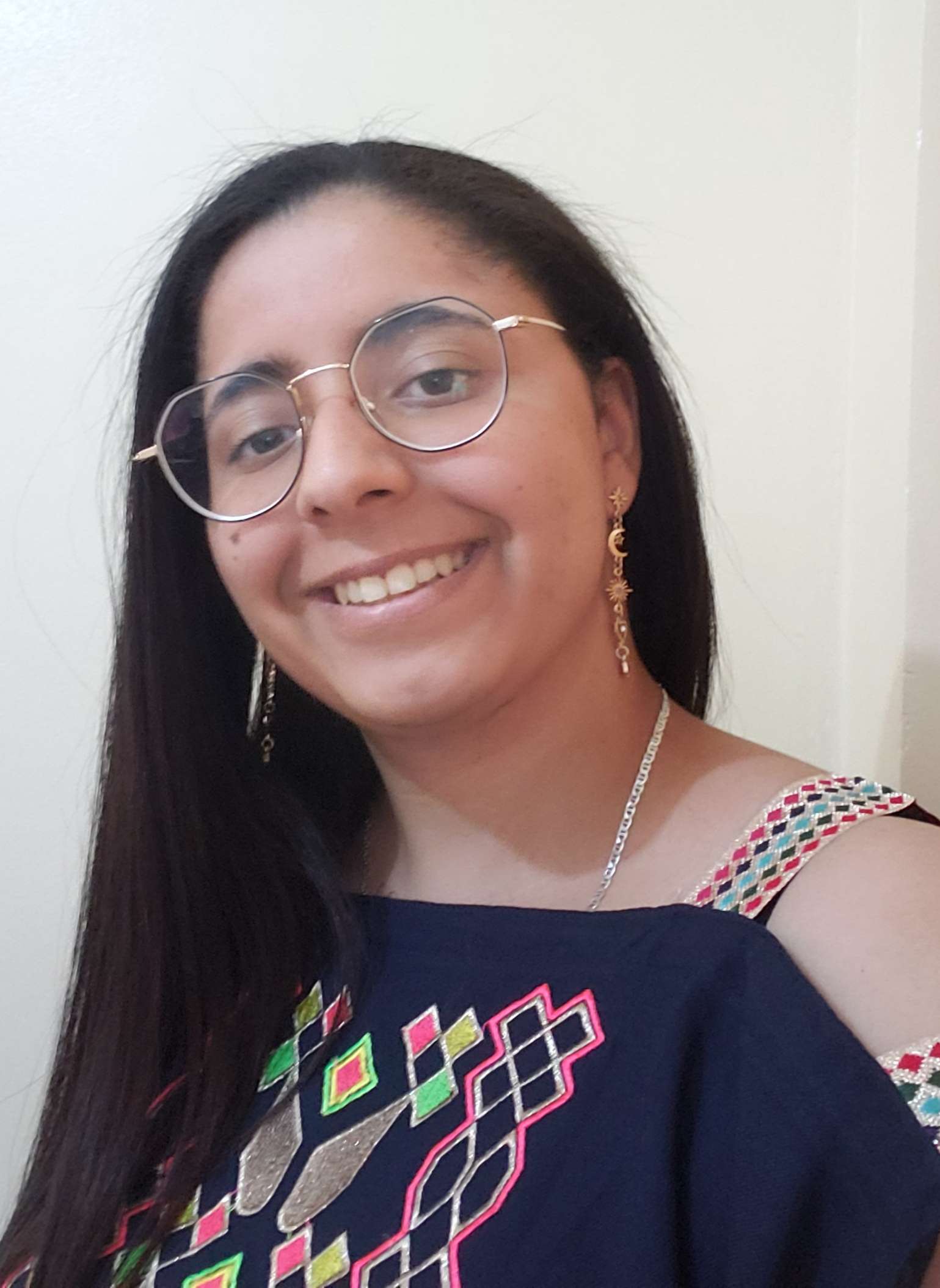
Tiphaine Gardon, a 28-year-old artist from Nice, perfectly embodies passion and versatility. From her first role at the age of 10, where she played Athena in a school adaptation of Ulysses, to her performances in intense plays and her cinematographic ambitions, her career reflects a constant quest for creativity and authenticity. Between theater, acting in front of the camera and artistic collaborations, she strives to push the limits of her art.


First of all, can you tell us a bit about yourself.
Good morning! Tiphaine Gardon, a 28-year-old woman from Nice — although I suspect there was an error in the calculations. I am a mixture of passions and experiences, but above all, I am an artist. My career has allowed me to touch a variety of worlds, always guided by the desire to express, create and share.
How did you discover your passion for theater? Was there a triggering moment?
My career has been marked by varied explorations: psychology, applied arts, aesthetics... All these fields aroused my curiosity without ever competing with this passion for theater, which had been in my head since childhood.
I started at the age of 10, getting my first female role in an adaptation of Ulysses organized by my junior high school, where I played Athena. It was my first experience on stage, and I put my heart and soul into it, until I made my own props. A memorable anecdote remains this cardboard helmet, a bit too big, that fell on my eyes. Finally, my teacher decided to award me that of my classmate with whom I was competing for the role... A small victory that was a bit clumsy, but so significant!
Afterwards, theater never left me: classes, café-theater, university experiences... In 2017, I participated in a family project that confronted me for the first time with a professional company, Cie Ka-Théâtre. Working alongside seasoned actors was a revelation. After several creations, I decided to launch myself fully and to become a professional once I got my bachelor's degree in psychology.
What do you remember from your training at Cours Florent and at the Fourth Wall Lab? How did these experiences shape your game?
My two years at Cours Florent enriched my theater culture, allowed me to explore various styles and techniques, and to have full fun on stage. I also discovered working in front of the camera for the first time. However, a victim of their success in terms of the number of students, I chose not to pursue a third year and to discover other horizons. At the same time, I joined Cie des 4Coins, where I played for over a year. An Elephant with a Broken Leg by Joelle Fossier, A Remarkable Experience.
As for the Fourth Wall Lab, it was an inspiring immersion in acting. Thanks to quality actor direction, I was able to explore a wide range of characters, refine my acting on camera and better identify the roles that suit me.

You mentioned that you started acting in 2017. What were your first challenges as an actress?
My first challenges date back to 2017 with The Soldier Doll, my very first theatrical experience with fifteen performances. Acting in theaters, sometimes in different villages or cities, was already a huge step for me. One performance in particular remains etched in my memory: the one where we had to act without the main actor. The panic was there, but we were able to adapt our game and ensure representation, a valuable lesson on the importance of responsiveness and collaboration in this business.
This project also had a very personal dimension. The Soldier Doll Was an adaptation of the novel From Powder to Sparrow written by my mother, Claudie Gardon and Eva Sautel and directed by Christine Matos (Cie Ka-Théâtre). I was honored to be able to revive this furry from Nice who was my grandmother's uncle. She attended our first performance and I was proud to contribute to the continuity of our family history. After the novel and the play, who knows, maybe one day a movie?
Another significant challenge was to replace the lead actress at a moment's notice in An Elephant with a Broken Leg. With dates already scheduled, I had to learn the text in record time. It was a great challenge, especially since it was my first play behind closed doors, where we were only two actors on stage.
How do you adapt to different types of roles, whether dramatic or comical?
That is a great question. Whether a role is dramatic or comical, the character always goes through a range of emotions. Before I even dive into the text, it is essential for me to understand the character deeply: to know him almost as well as I do, to understand who he is talking to, what he really means, and what his intentions are. Once these foundations are laid, adaptation occurs naturally. Everything lies in the ability to feel, to connect to the essence of the character and to let emotions guide the interpretation.

You explored the game on camera. How does that differ from your experience on stage?
On stage, I appreciate the intensity of being able to embody a character all at once, from the beginning to the end of the play. All the work done during rehearsals results in a complete and immersive performance, where you become one with the character. Theater offers great freedom of expression, in-depth research, and a wealth of acting. Each performance is different, evolving and the audience is also an influential factor.
On the front of the camera, it's different. Although the stage equivalent is a sequence shot, filming often involves numerous takes, sometimes on the same plane. It requires an ability to rediscover, again and again, the same energy and authenticity. The game on the screen is more intimate, almost daily: it does not require voicing as much or accentuating expressions as in theater. It's a more subtle game, but just as accurate.
Obviously, all this depends on the expectations of the director or director.
What are your rituals or preparation methods before entering the stage or in front of the camera?
Before entering the stage or in front of the camera, I start with a complete warm-up: work on the breath, the voice, the joint and the body. This moment is essential to refocus. Then, I take the time to reconnect with my playmates, often by sharing part of the warm-up together, which ends with a transfer of energy and kindness, sometimes even with a hug.
I also need a moment to myself. This can involve listening to certain music, a quiet time where I do nothing, before diving into the preparation and the embodiment of the character. And finally, before the public arrives, we always end with a little battle cry to give each other a last boost of energy!

How do you find inspiration to bring your characters to life and captivate your audience?
It all starts with a thorough analysis of the text: understanding each thought, the subtext and the challenges of the role. Once these foundations have been laid, I leave room for interpretation. The main thing is to go through and experience each scene to the fullest. If I really feel what the character is going through, that sincerity is naturally transmitted to the audience, who will then be captivated.
Your “Expressions” gallery is fascinating. How do you work to capture so many emotions through your expressions?
Fascinating, I don't know, but I've always had the habit, ever since I was a kid, of being a clown in front of a lens. Maybe it all comes from there! More seriously, I like to explore a wide range of emotions and characters. For me, each expression is a way of telling a story, of capturing a specific moment, and it allows me to experiment freely while having fun.
Do you have models or artists who have inspired you in your career?
Of course, many artists have inspired me and continue to do so, each with a specificity and their own uniqueness. Audrey Tautou for her sensitivity and gentleness, Fabrice Luchini for her love of words and her accuracy, Meryl Streep for her incredible metamorphoses, or Jim Carrey for her unique expressiveness.
They undoubtedly inspired me to play, but I could not name one artist in particular who would have triggered this passion. It is as if this desire had always been in me: a natural need to explore different personalities, to express my multiple facets and to bring all my “I's” to life.
You collaborate with photographers and directors. How important is this relationship for the success of a project?
I like the idea of being able to best match the director's vision or to catch the eye of the photographer, while bringing my own sensitivity and personal touch. These collaborations are essential because they make it possible to create true artistic chemistry. Understanding their expectations, their inspirations, and exchanging our ideas always enriched the project.
It is a team effort where everyone experiences a part of their creativity. For me, the key to success lies in communication and mutual trust. Listening while daring to propose allows you to achieve an authentic result, whether it is a photo shoot or a film production.

What are the biggest challenges you have faced in your acting career?
I've already mentioned some of them above, but one of my latest challenges is undoubtedly my role as Iris in A Girl with No One, a piece we are currently playing, inspired by the work of Carine Lacroix. This role marks a turning point for me: it's my first character so intense with a powerful text, far from the comic register I was used to.
Interpreting a woman in a prison environment, a universe that I don't know, required a real work of imagination and projection. You had to understand and feel her sorrows, her frustrations, this shell that she has built for herself. Iris is a complex character, locked in an oppressive daily life, but who, thanks to Camille, the animator of a writing workshop, begins to reconnect to her sensations, to writing, and to her imagination... which, paradoxically, frightens her.
It is a deeply poetic and epistolary piece. It tells of a battle against a double lockdown: physical and emotional. Seeing how Iris uses writing to avoid falling into madness was both a technical and emotional challenge for me.
What would you say to someone who wants to start acting or acting?
I would tell him not to take too long on learning to text. Learn it quickly so you can focus on what matters most: exploring the game, looking for different interpretations, and bringing the character to life. Above all, take the time to really get to know your character, as well as you know yourself. Understand his thoughts, his intentions, his flaws, and his strengths. It's what will make your game authentic and engaging. Theater or Acting is above all a space for exploration and freedom, so dare to experiment, take risks, and have fun!
What are your long-term goals or dreams as an actress? Is there a particular role or project that you would like to achieve?
I dream of acting in feature films and exploring as many genres as possible: committed movies, period movies, action movies... I am thirsty for diversity and experiences.
When I was younger, I was attracted to a thousand different jobs. I wanted to try everything: architect, book restorer, war reporter, criminologist, or even Yamakasi! This curiosity, this desire to live a thousand lives, prompted me to look for what could bring all these aspirations together. And one day, the revelation came to me: to become an actress. Being an actress means having the opportunity to explore these varied worlds, to embody different lives, and to immerse yourself in unique stories... while acting. It's like being the actress in your own life, bringing together all your passions into a single vocation.
So my long-term goal is clear: to continue to thrive through roles that enrich and elevate me. Expand my game, gain experience, and why not, one day, create and direct my own characters or scenarios, stories that touch and transcend both the audience and myself. That would be the ultimate accomplishment.
If you could act in an international production or work with a specific director, who or what would you choose and why?
Park Chan-Wook, Korean director of One of My Favorite Movies Old Boy. An intense psychological thriller where action, suspense, enigma, stylized and choreographed scenes of violence blend together in a murky and deeply immersive atmosphere. The film's structure, pace, and aesthetics are striking. This movie is a perfect blend of everything that I love and that captivates me.
Tiphaine GARDON — Actress • Actress • Nice, Francia
Portfolio: gardontiphaine.bookfolio.fr